

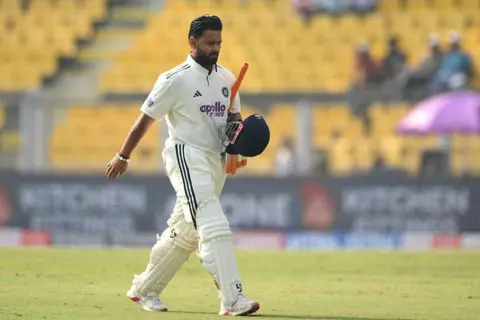
India's shocking 0-2 defeat to the Proteas in the recently concluded red-ball series has left the team reeling.
Earlier this week, the visiting team inflicted upon India their heaviest loss in Test cricket, contrary to predictions. It was South Africa's first series win in India in 25 years and the host nation's second home series loss in just a year after a 12-year invincible streak.
The winning rhythm gained during the past six months has all but vanished and the futures of several players - including head coach the coach - now hang in the balance.
Early Optimism Disappears
The emerging side's commendable display in England this summer, under a new captain, pointed to a smooth transition following the near-simultaneous departures of veterans Ashwin, Sharma, and Kohli.
A facile 2-0 victory over the Windies at the beginning of the home campaign strengthened that view, till the Proteas turned up and handed out a crushing loss.
The home side were a bit unlucky that captain Gill suffered an injury quickly in the opening Test and was ruled out in the contest. However, that does not excuse or justify the team of the terribly sub-par performance in the two games against the opposition.
Several established players took a hit, and a few members aspiring to long red-ball careers were exposed as not yet good enough - technically or mentally - for the format.
Worrying Trend
This was the second whitewash in home conditions experienced by the Indian team in just more than a year. Last year, little-fancied the Kiwis had achieved a staggering 3-0 win which effectively cost India a spot in the Test championship finale.
The latest loss to South Africa risks harming India's hopes of reaching the decider of this season also.
After being third in the WTC table prior to the contest, the side have fallen to fifth place. Even though nine more Tests are still to come, half of these are against Australia. Typically, performing in familiar conditions would be a significant benefit - even when facing the strong Australian side. But the disasters against New Zealand and South Africa provide no basis for such assurance.
Roots of the Decline
The national team's weakness in Test cricket has been significantly highlighted. Nevertheless, why India have struggled so much in Test matches at home lately is still bewildering.
Since the turn of the century, India were regarded as impregnable in red-ball cricket at home. In demanding climates and on surfaces that favored spin bowling and aided their squad, the hosts faced little challenge. The occasional loss, such as in 2012-13 against England, was considered an exception.
Currently, the team appear to be beatable in their own backyard.
Versus the Kiwis in last year and the Proteas this year, India were defeated by their own tactics. The surfaces they prepared to help their style backfired spectacularly, as opponents capitalized on them more skillfully, surpassing the Indian batters and bowlers when it was most crucial.
What's Gone Wrong?
A few experts argue that India is failing in home conditions because domestic pitches have been changed from turners to quick wickets to get cricketers ready to succeed overseas.
Others highlight that the domestic T20 league, in which several international stars take part, has removed the unfamiliarity and challenge subcontinental pitches would challenge them with before.
Even though there is some truth in both analyses, it does not clarify why the team's showings at home have seen such a dramatic drop.

Several Weaknesses
Many past stars identify a complicated issue, not just one or two factors.
Experts and participants have highlighted various flaws following India's disappointing performance to the Proteas: underrating the rivals, poor preparation, poor choices, excessive self-belief, constant chopping and changing of the playing XI, and prioritising limited-overs over red-ball cricket.
This was evident in the showings of the team.
Members like Rishabh Pant and Jaiswal, of whom high hopes were held, paid for their carelessness, while Sudarshan, Reddy, and Dhruv Jurel - who were aiming to establish their place in the team - came up short in technique and temperament, paying a heavy price for their casual attitude.
Only a handful - Jadeja, Jasprit Bumrah, Kuldeep, Siraj and Washington Sundar - lived up to their skill and fame - but inadequately to claim wins.
Coaching Scrutiny
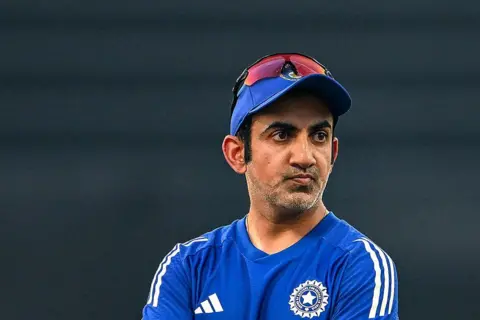
The analysis didn't spare the entire setup - team selectors and coaching staff were also criticized, driven by disappointed supporters and critical former players. At the centre of the criticism was mentor Gautam Gambhir.
During his post-series press

